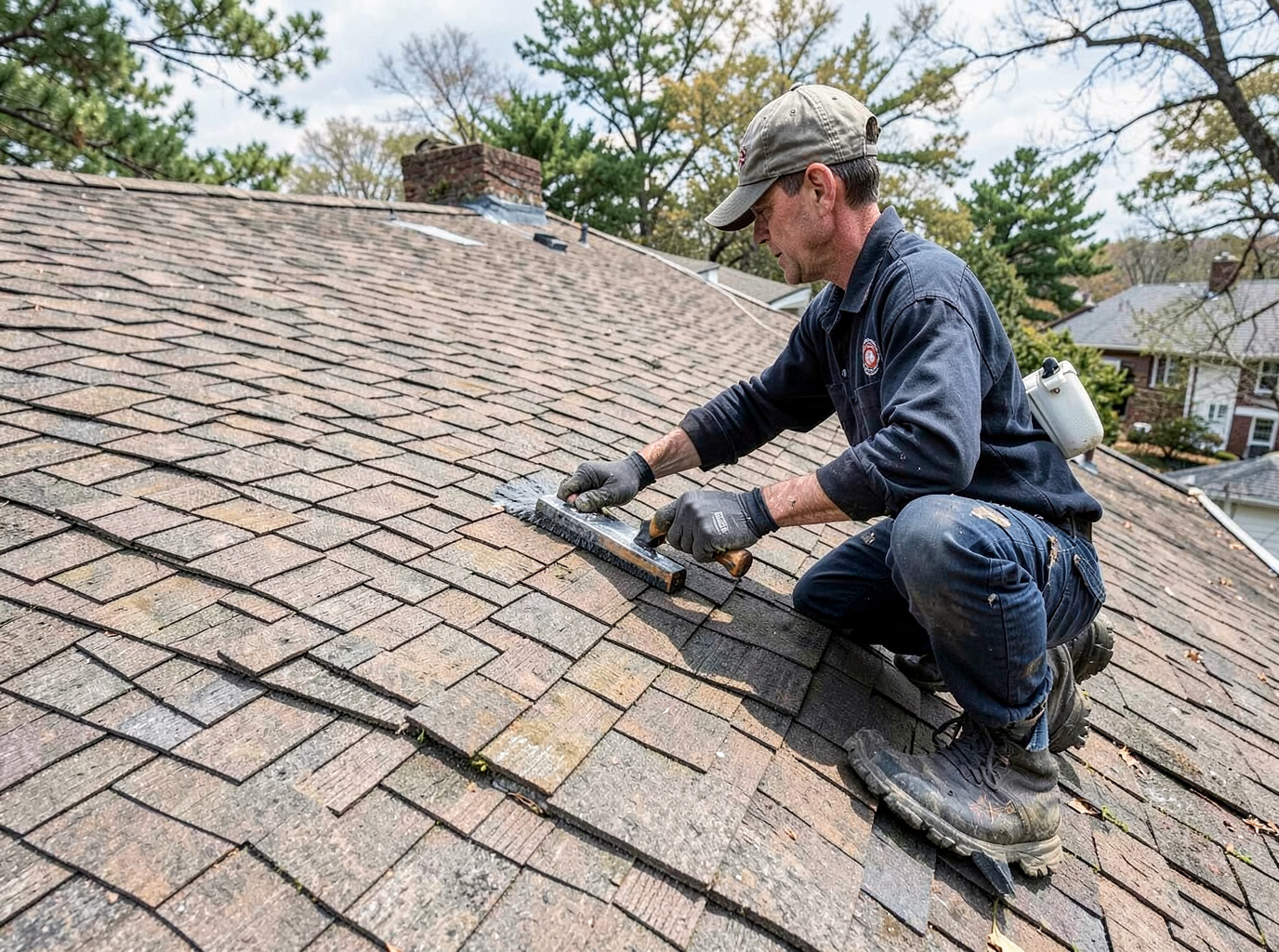
Cedar roofs around Newtown Square, Edgemont, and Gradyville take a beating from Delaware County’s humid subtropical pattern: hot, sticky summers that feed moss and algae in the shade of mature trees, then cold winters that drive freeze-thaw cycling through the shakes. Homes near Tyler Arboretum and the Newtown Square Corporate Campus often sit under heavy canopy, so needles, leaves, and pollen pack the valleys and hold moisture against the wood. We work those roofs the way they actually fail here—lifting debris, checking for cupped or split shakes, and treating the grain so it can dry between storms rather than staying damp for weeks.
Older housing stock in this part of Delaware County still carries original or early-replacement cedar, especially on colonials and farmhouses between Media, Broomall, and Wayne. Those roofs were never meant to sit under constant shade and leaf load. Maintenance is not a wash-and-forget job; it means inspecting the underlayment at the eaves, confirming the felt or ice-and-water shield has not been compromised by ice dams, and replacing only the shakes that have lost their taper or split along the grain. We do not pressure-wash cedar—high pressure drives water into the end grain and shortens the life of the remaining shakes.
Code and common-sense notes for this work: Delaware County inspectors expect proper flashing at chimneys and sidewalls, and they notice when someone has painted over cedar instead of using a penetrating oil or preservative. We flag any roof that has been coated with a film-forming product, because that trap moisture and can void remaining shake life. If the roof is too far gone—widespread cupping, rot at the butts, or sagging sheathing—we say so and talk installation, not another round of maintenance. Honest assessment beats another season of leaks over the living room.
Seasonal timing matters. Late spring after pollen drop and early fall before leaf-on are the windows when we can actually see the wood and let treatments dry. Mid-summer humidity keeps surfaces wet; mid-winter ice makes walking the roof unsafe and hides splits. We schedule around those realities, not a calendar that ignores Newtown Square weather.
Technician insight
In Newtown Square the thing that catches most people out with cedar roof maintenance is the combination of heavy tree cover and freeze-thaw. Homes near Tyler Arboretum and along West Chester Pike stay shaded and wet through humid summers, then ice dams at the eaves in winter lift the butts. Homeowners often pressure-wash or paint the shakes, which traps moisture in the grain. We spend more time undoing that than on roofs that were simply kept clear and oiled.
Shaded cedar above a Gradyville colonial
A homeowner called after dark stains and a small drip at the living-room ceiling following a freeze. We found packed needles in the valleys, moss on the north slope, and several cupped shakes at the eave where ice had sat. We cleared the debris, replaced the failed shakes, treated the remaining wood, and checked the ice-and-water at the drip edge. The drip stopped after the next rain; they now schedule a clean before leaf-on each fall.
Cedar Roof Maintenance Services We Offer
✓Cedar Shake Cleaning and Debris Removal
Hand and low-pressure removal of moss, algae, needles, and leaf dams from valleys and butts so cedar in Newtown Square can dry between storms.
✓Penetrating Oil and Preservative Treatment
Oil-based treatments that soak into the grain rather than film over it, helping shakes in Edgemont and Gradyville resist humidity and freeze-thaw.
✓Individual Shake and Shingle Replacement
Selective replacement of split, cupped, or rotten shakes without tearing off a whole slope—common on older Delaware County roofs.
✓Valley and Flashing Inspection for Cedar Roofs
Check and reseal valleys, chimney, and sidewall flashing where leaf dams and ice most often start leaks near Tyler Arboretum properties.
✓Moss and Algae Control on Cedar
Targeted treatment and zinc or copper strip options where shade from mature trees keeps cedar wet through Newtown Square summers.
✓Eave and Ice-Dam Assessment on Cedar
Inspect ice-and-water shield and drip edge after cold winters so freeze-thaw does not lift shakes or rot the fascia.
✓Cedar Roof Ventilation Check
Confirm attic airflow so humid summer air and winter condensation do not cook the underside of the shakes from inside.
Cedar Roof Maintenance Cost in Newtown Square, PA
| Service | Typical Range | What Affects It |
|---|---|---|
| Inspection and debris clean (typical residential) | $350–$800 | Steep pitch, heavy leaf load, or limited access from trees raises the range. |
| Moss/algae treatment plus oil | $600–$1,800 | Square footage, number of slopes, and whether wood must dry first. |
| Selective shake replacement (per square or cluster) | $400–$1,200 | How many shakes, matching remaining color/grain, and flashing work. |
| Valley/flashing reseal add-on | $250–$700 | Length of valleys and chimney/sidewall complexity. |
Ranges are typical for Newtown Square, PA and confirmed with an exact written quote before any work starts.
How it works
- 1
On-Roof Inspection
We walk the slopes, photograph problem shakes, valleys, and flashing, and note shade, debris, and ice-dam patterns specific to the house.
- 2
Debris And Biological Growth Removal
Hand-clean valleys and butts; treat moss and algae without high-pressure water that drives moisture into the end grain.
- 3
Selective Repair And Treatment
Replace only failed shakes, reseal critical flashing, then apply penetrating oil or preservative once the wood is dry enough to accept it.
- 4
Walkthrough And Next-Cycle Plan
Show you what was done, what to watch after the next storm or freeze, and when another maintenance visit actually makes sense.
Pricing
Cedar maintenance in Newtown Square is priced by roof size, access, debris load, and how many shakes need replacement—not a one-price flyer. We give an on-site range after we see the wood, shade, and ice-dam history.