2026-09-02 ·
Do You Need Roof Insulation Installers? Signs to Watch For
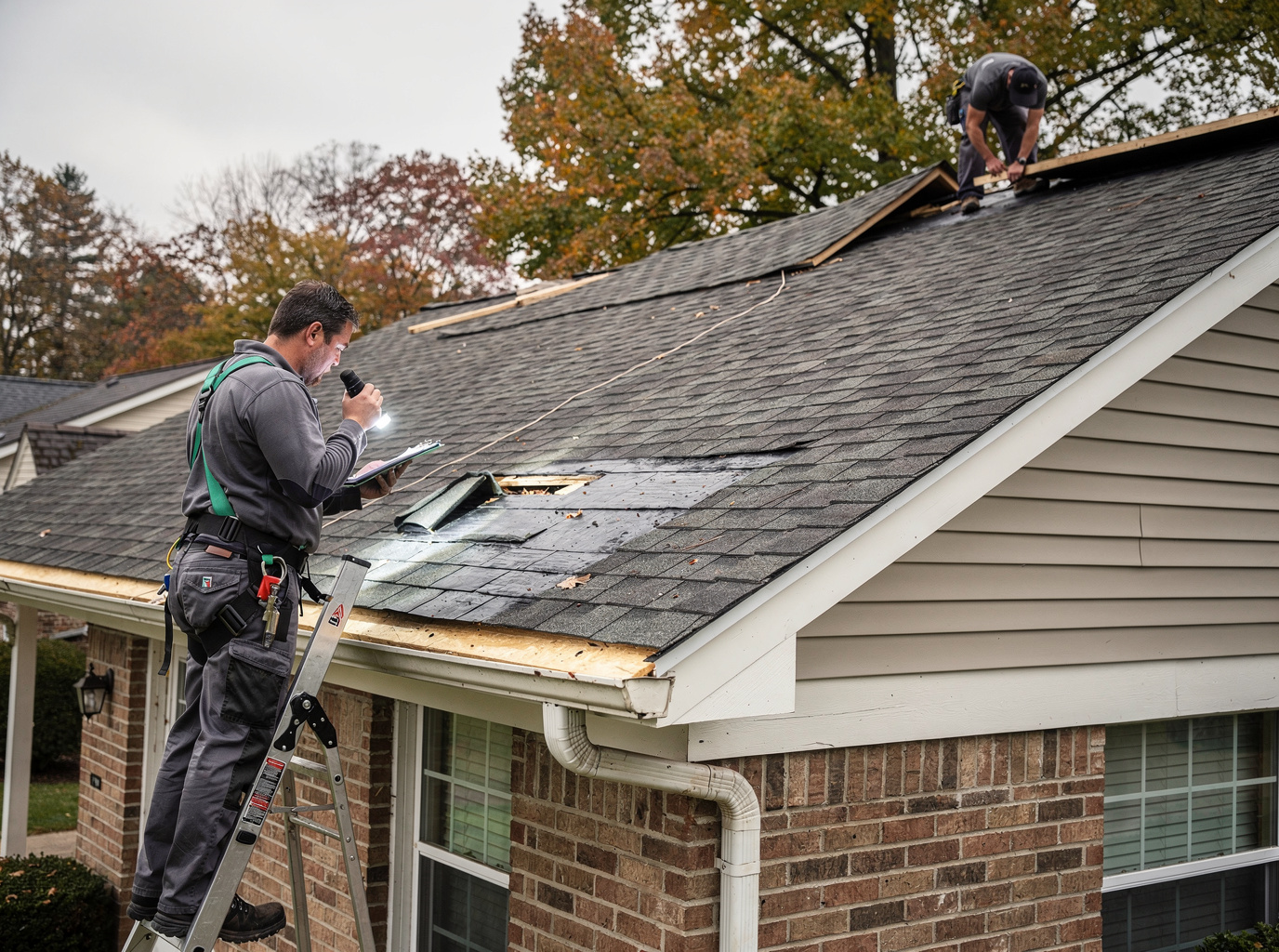
You need roof insulation installers when ice dams form after a freeze, upstairs rooms run 8–12 degrees hotter than the first floor in July, or heating and cooling bills climb without a change in use. Those three clues appear regularly on colonials and split-levels in Newtown Square, Edgemont, and Gradyville because many attics were built with little or no insulation and the humid subtropical climate—hot, sticky summers and cold winters—pushes moisture and heat through every gap. A walk-through from our shop at 3475 West Chester Pike can confirm whether the problem is thin batts, compressed cellulose, or missing ventilation before you spend on a full roof installation.
Ice Dams, Hot Rooms, and Bills That Jump in Delaware County
After a stretch of 20-degree nights, meltwater from a poorly insulated roof deck refreezes at the eaves and backs up under shingles. That pattern shows up along West Chester Pike and around the Newtown Square Corporate Campus more than on newer infill because older rafters often sit over 3–4 inches of settled fiberglass. In summer the same thin layer lets solar gain cook the second floor; homeowners in Media and Broomall report the same 8–12 degree split. Utility statements that rise 20–30 percent year over year, with no extra occupancy, usually trace to the same attic. Look also for frost on nail heads in January, a musty smell after humid weeks, and daylight visible at the eaves. Those are not cosmetic issues; they mean heat and moisture are moving through the roof assembly and shortening shingle life. A simple infrared scan on a cold morning or a hot afternoon will map the cold spots without tearing anything open. If the scan shows large uninsulated bays, adding insulation at the same time as asphalt shingle roof installation is the cleanest fix.
How Local Housing Stock and Terrain Change the Job
Most roofs we see in Newtown Square and Edgemont sit on 1.5-story or 2-story frames from the 1950s–1980s with low-pitch attics and limited hatch access. Gradyville’s wooded lots add shade that keeps decks cooler in summer but traps humidity after rain, so cellulose that has settled into clumps holds moisture against the sheathing. Sloped lots near Tyler Arboretum mean one side of the house sheds water faster than the other; the slow side often shows the first ice dams. Soil here is clay-heavy, so foundation movement over decades can open small gaps at the top plates where insulation never reached. Those gaps act like chimneys in winter. When we open an attic we measure existing R-value with a probe, check for knob-and-tube or old knob wiring that cannot be buried, and look at soffit baffles. If baffles are crushed, new insulation will block intake air and create new ice-dam problems. The practical sequence is always ventilation first, then insulation, then a tight air seal at the ceiling plane. Skipping that order in this climate simply moves the condensation line.
What a Site Visit Actually Covers and When to Combine Work
We schedule Monday–Friday 8am–6pm or Saturday 9am–2pm so someone can be home for attic access. The visit itself is 45–60 minutes: hatch inspection, moisture meter on sheathing, and photos of any staining. If the roof is already due for replacement, adding insulation during a new roof is cheaper than a second trip because the deck is open. Typical add-on for blown cellulose or unfaced batts on a 1,200–1,800 square-foot Newtown Square cape runs in the same range as a modest roof repair rather than a full tear-off. Homes in Wayne with cathedral ceilings need spray foam at the rafters instead of floor insulation; that decision is made on site, not from a brochure. After the work we leave a simple R-value sticker and a photo of the finished bays so the next owner or inspector can see what was done. The goal is not a sales pitch; it is a roof that stops leaking heat in January and baking the bedrooms in August, which is exactly what Delaware County weather demands.