2026-09-02 ·
Residential Roof Maintenance Tips to Extend Your Roof's Life
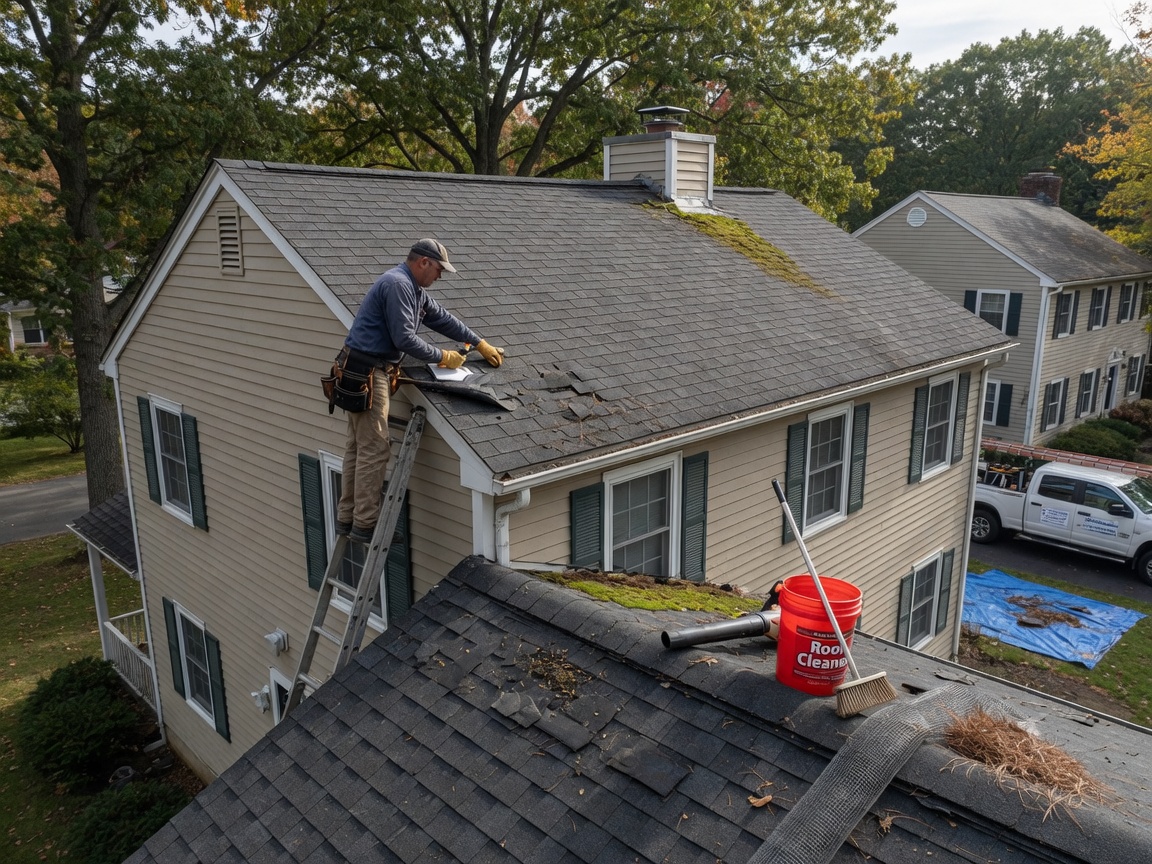
A residential roof in Newtown Square typically lasts 15–20 years on asphalt shingles if ignored, but twice-yearly inspections, gutter cleaning every 3–6 months, and repairs within days of a leak can push that to 25–30 years. Metal and slate last longer still when snow, ice dams, and summer humidity are managed. The difference is not luck; it is catching granule loss, lifted flashing, and clogged downspouts before they soak the deck on older colonials and split-levels common from Newtown Square through Edgemont and Gradyville.
Twice-Yearly Inspections That Match Delaware County Weather
Walk the property from the ground in late March and again in October. After a humid subtropical summer the shingles on south and west slopes near Tyler Arboretum and the Newtown Square Corporate Campus often show curled edges and missing granules; after a cold winter you look for ice-dam stains at eaves and popped nails. Use binoculars first. Note any sagging ridge, dark streaks from algae, or daylight in the attic. Inside, check the underside of the deck for dark spots after a rain. Homes in Media, Broomall, and Wayne share the same freeze-thaw cycle, so the same schedule works. Photograph problem areas so you can compare next season. If you see more than a handful of damaged shingles or wet insulation, schedule roof repair rather than waiting. A 30-minute walk twice a year costs nothing and routinely adds years because small openings stay small.
Gutters, Downspouts, and Water That Never Leaves the Roof
Clogged gutters are the fastest way to shorten a roof here. Leaves from mature oaks and maples in Newtown Square and Gradyville pack the troughs by November; ice then forms and backs water under the first three courses of shingles. Clean gutters in May and again after the last heavy leaf drop, and flush downspouts until water runs freely 4–6 feet from the foundation. Add or extend splash blocks on clay-heavy Delaware County soil so runoff does not pool against the fascia. Check that drip edge is still seated and that hangers have not pulled loose after a heavy snow. If water stains appear on the interior ceiling near exterior walls, the problem is almost always overflow, not a hole in the field. Pair gutter work with a look at roof maintenance so flashing at chimneys and skylights is resealed while you are already on a ladder. Homes that keep water moving last noticeably longer than those that let ice sit.
Heat, Humidity, and Freeze-Thaw Wear You Can See
Hot summers cook the asphalt binder on south-facing slopes; granules wash into the gutters and the remaining mat becomes brittle. Cold winters then flex that same mat until cracks open. Look for bald spots larger than a quarter, especially after a July heat wave, and for cracked caulk at pipe boots after the first hard freeze. Algae streaks thrive in the humidity and hold moisture against the shingle surface, accelerating granule loss. A simple zinc or copper strip at the ridge can slow that growth on roofs that stay shaded by trees near Edgemont. After a nor’easter, walk the yard for shingle tabs and check valleys for debris dams. Shingle damage warning signs often start as these small, visible changes long before a leak appears in the living space. Addressing them in the same season keeps the underlayment dry and the deck from rotting.
Attic Ventilation, Ice Dams, and When to Call for Help
Inadequate attic airflow turns a Newtown Square roof into an ice factory. Warm air leaking from living space melts snow on the upper roof; water runs to the cold eave and freezes, forcing ice under the shingles. Feel the attic in January: if it is much warmer than outside, add baffles and a ridge vent or improve insulation to keep the roof deck near outdoor temperature. Never use a torch or hammer on ice; that damages the membrane. If you already have stained ceilings or daylight at the eaves, the deck may need attention beyond simple maintenance. Compare notes with neighbors in Broomall and Wayne who have had similar ice issues after the same storm. For larger questions about material life or a full roof installation when maintenance is no longer enough, an on-site look during weekday hours (Mon–Fri 8am–6pm, Sat 9am–2pm) from the shop at 3475 West Chester Pike can confirm whether flashing, ventilation, or a section of deck is the real limit. Small, consistent habits—inspections, clear gutters, dry attic—remain the cheapest way to keep a roof working through another decade of Delaware County summers and winters.