2026-09-02 ·
Roof Ventilation Installation: Why It Matters More Than You Think
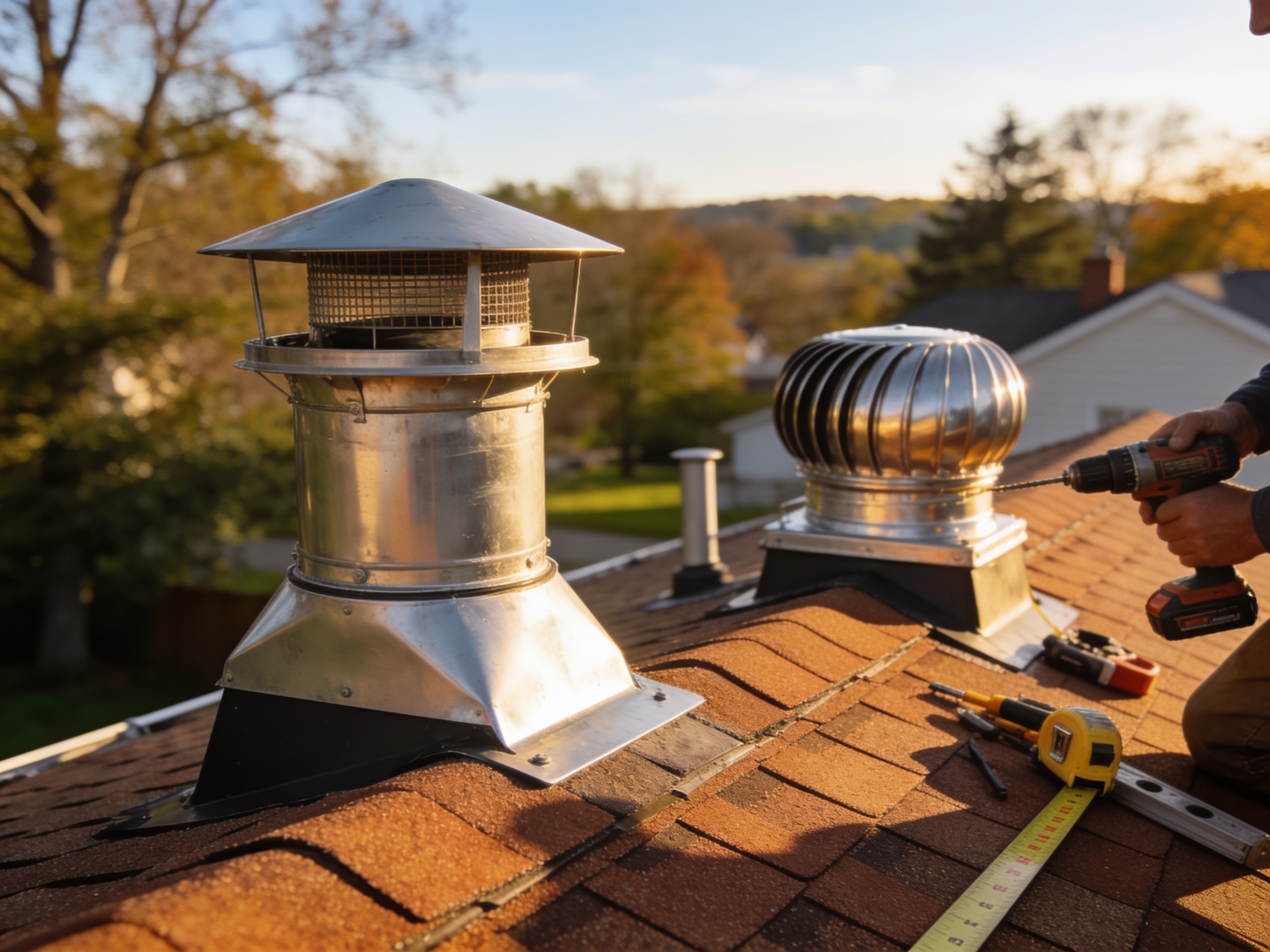
Roof ventilation installation matters more than most Newtown Square homeowners realize because an under-vented attic routinely hits 140–160°F on a humid subtropical summer afternoon, cooking shingles from below, driving indoor cooling loads up 10–20%, and setting up ice dams once winter temperatures drop. Balanced intake at the eaves and exhaust at the ridge or high vents can cut those peaks by 30–50°F, slow moisture that rusts nails and stains drywall, and add years to an asphalt or metal roof on the older colonials and split-levels common from Edgemont through Gradyville. Skip it and you pay in curled tabs, sagging sheathing, and winter leaks along West Chester Pike even when the shingles themselves still look intact.
How Delaware County Weather Stresses Unventilated Roofs
Newtown Square sits in Delaware County’s humid subtropical belt: sticky summers that push attic air well past 140°F and cold winters that swing below freezing for days. That swing is the problem. Heat trapped under dark shingles accelerates asphalt aging; manufacturers design for deck temperatures, not a sealed oven. Moisture from bathrooms and kitchens condenses on cold sheathing once nights drop, then freeze-thaw cycles lift fasteners. Homes near Tyler Arboretum and the Newtown Square Corporate Campus often sit among mature trees, so shade helps the roof surface but does nothing for a closed attic that cannot dump heat after sunset.
The housing stock makes it worse. Many roofs in Newtown Square, Edgemont, and Gradyville were built with 2x6 or 2x8 rafters, limited soffit area, and little thought for continuous ridge vent. A 1,800–2,400 sq ft colonial with a 6/12 pitch may have only a handful of box vents that were never sized to the 1:150 or 1:300 net-free-area rules. After a storm, wet insulation packs down and blocks whatever intake existed. Ice dams form on north-facing eaves facing Media and Broomall because heat leaking from below melts snow, which refreezes at the cold overhang. Ventilation is not a luxury add-on here; it is how you keep the deck dry when the weather does exactly what it always does.
What Proper Intake And Exhaust Actually Do On Local Homes
A working system is a chimney: cool air in at the soffits, warm moist air out at the ridge. On a typical Newtown Square roof we look for continuous soffit vents (or enough individual vents) totaling at least as much net free area as the ridge, then a ridge vent or a calculated set of roof vents that do not short-circuit the flow. Power fans can help a stubborn hip roof, but they need a thermostat and they still require intake—otherwise they pull conditioned air from the house. Static vents work if the attic is baffled so insulation never covers the soffit channel.
On asphalt, that airflow keeps the underside of the shingles closer to outdoor air instead of a 150°F sandwich; you see fewer blistered tabs and less granule loss after 8–12 years. On metal, it reduces condensation that drips onto the felt. In winter the same stack effect keeps the roof deck closer to outdoor temperature so snow stays snow instead of meltwater. We often pair ventilation with asphalt shingle roof installation or a full roof installation so baffles, drip edge, and ridge vent go on in one sequence. Homes in Wayne and Media with cathedral ceilings need extra care: no attic, so we use vented nailers or a cold-roof assembly rather than hoping a couple of gable vents will suffice.
Signs Your Newtown Square Attic Needs Better Airflow
Walk the attic in July. If the air hits you like a wall and the sheathing is too hot to rest a hand on, intake or exhaust is missing. Look for frost on nails in January, dark staining on the underside of the deck, or insulation that is packed and gray near the eaves. Outside, look for curled shingle edges, moss on north slopes, and icicles that hang in a thick curtain while the rest of the roof is bare. Those icicles are meltwater from heat leaking through an unventilated space, not proof the house is “cozy.”
Interior clues show up in upstairs bedrooms: rooms that never cool, peeling paint on the ceiling, or a musty smell after a humid week. Ice dams along the gutter line after a Delaware County snowstorm are the classic winter tell. If a previous crew installed a ridge vent but left the soffits blocked with blown cellulose, you have exhaust without intake—the system pulls from the living space and can actually increase moisture. A quick check of net free area versus roof square footage tells you whether the original 1970s vents were ever enough. Fixing airflow is cheaper than replacing sheathing that has already started to delaminate.
How Ventilation Fits Into A Full Roof Installation
When we tear off in Newtown Square we treat ventilation as part of the deck, not an afterthought. That means clearing soffit channels, installing baffles every rafter bay, adding continuous ridge vent cut to the manufacturer’s slot width, and confirming intake matches exhaust. Overlaying new shingles over old without opening the ridge is a common shortcut that leaves the attic worse than before. Drip edge, ice-and-water at the eaves, and proper flashing at chimneys all work with airflow; they do not replace it. For cost context, see new roof installation cost and how ridge details affect roof ridge cap repair.