2026-09-02 ·
Shingle Roof Repair Coatings: Do They Actually Work
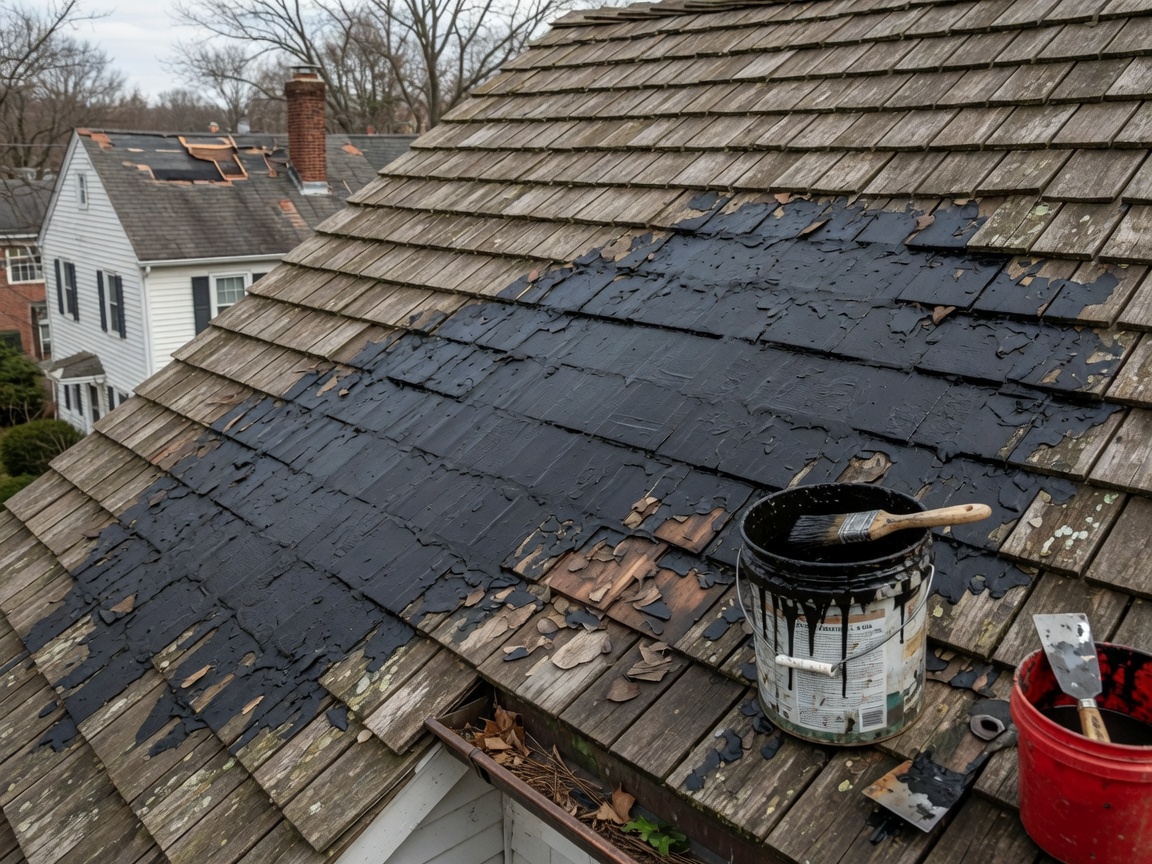
Shingle roof repair coatings do not restore a failing roof in Newtown Square. On typical Delaware County asphalt roofs they may slow granule loss for 3–7 years if the deck is sound and leaks are already stopped, but they cannot seal curled tabs, replace missing shingles, or stop ice-dam leaks after cold winters. Most products are acrylic or asphalt emulsions that sit on the surface; once freeze-thaw cycles and humid summers work on them, they crack or wash off. Homeowners in Edgemont and Gradyville who spray first and inspect later often spend $400–$1,200 twice—once on the coating and again on proper roof repair.
How Coatings Interact With Asphalt Shingles Here
Newtown Square’s humid subtropical pattern—hot, sticky summers and cold winters—beats coatings harder than the label suggests. Asphalt shingles on 1950s–1980s split-levels and colonials around Tyler Arboretum and the Newtown Square Corporate Campus already lose granules from UV and thermal cycling. A coating fills some of those bare spots and can drop surface temperature a few degrees, which slightly slows further granule loss. It does not re-bond the asphalt to the fiberglass mat. When overnight lows drop below freezing after a wet day, water in the coating film expands and the film micro-cracks. By the second or third winter those cracks telegraph through, and the next summer’s humidity peels the film at the edges. On roofs that already have two layers—common when owners once chose roofing over existing shingles—the extra weight and trapped moisture make peeling worse. Coatings also change the fire rating and can void remaining manufacturer coverage on architectural shingles still under warranty.
When a Coating Might Buy Time
A coating can be a short bridge, not a repair, in a few narrow cases. If a 15–20 year-old 3-tab roof in Media or Broomall shows uniform light granule loss, no curling, no missing tabs, and dry attics after a hose test, an acrylic coating applied at 1–2 gallons per 100 square feet may add 3–5 years before a full asphalt shingle roof installation is due. The same is true for a low-slope porch roof that only weeps at the drip edge after wind-driven rain. Cost on a 1,800–2,400 square-foot Newtown Square house typically runs $800–$2,200 including lift rental and masking, versus $8,000–$14,000 for a tear-off. The coating must go on a clean, dry, 50–85°F surface; Delaware County’s spring pollen and fall leaf tannins ruin adhesion if you skip washing. Never coat over active leaks, moss, or algae—those stay wet underneath. If you are already planning to sell within 2–4 years and the buyer’s inspector will see a uniform color, the cosmetic gain can be real. It is still not a structural fix.
Why Coatings Fail on Typical Local Roofs
Most failures we see after a coating job come from the housing stock itself. Many Newtown Square and Wayne roofs sit on 4/12 to 6/12 pitches with valleys that dump water toward chimneys and skylights. Ice dams form along those eaves every few winters; water backs up under the tabs, and a surface film cannot stop it. Nail pops from 40-year-old sheathing push through the coating within one season. Flashing at step walls and around plumbing stacks was often done with old galvanized metal that has already rusted; coating over rust simply hides the next leak. Soil in this part of Delaware County holds moisture, so crawl spaces and attics run humid; that moisture drives up through the deck and blisters the coating from below. Wind-driven rain off the ridges near Gradyville lifts the film at the rake edges. Once the film is compromised, the remaining granules wash into gutters and clog downspouts—creating a second problem. A coating also makes future roof leak repair harder because you cannot see the original shingle color or the path of water stains.
Better Alternatives Than Spraying First
If the goal is to stop water, start with diagnosis, not a sprayer. Walk the attic after a rain; look for dark sheathing, rusted nails, and daylight at the eaves. Outside, check for curled, cracked, or missing shingles, especially on the south and west faces that take the most sun. Replace those tabs, re-nail popped fasteners, and reseal flashings before any coating is even discussed. For roofs past 20–25 years with widespread granule loss, a full replacement is usually cheaper over 10 years than two coating cycles plus emergency tarps. Compare that path in our shingle installation cost notes. Seasonal roof preventative maintenance — gutter cleaning, moss treatment, and attic ventilation checks — extends remaining life more reliably than a film. If storm damage is the issue, document it before anyone coats; insurance rarely pays for a coating after the fact. We work Monday–Friday 8am–6pm and Saturday 9am–2pm from 3475 West Chester Pike and will tell you when a coating is wasted money.